The "No First Strike" Era in the Middle East: Iran’s New Regional Strategy
3/7/20261 min read
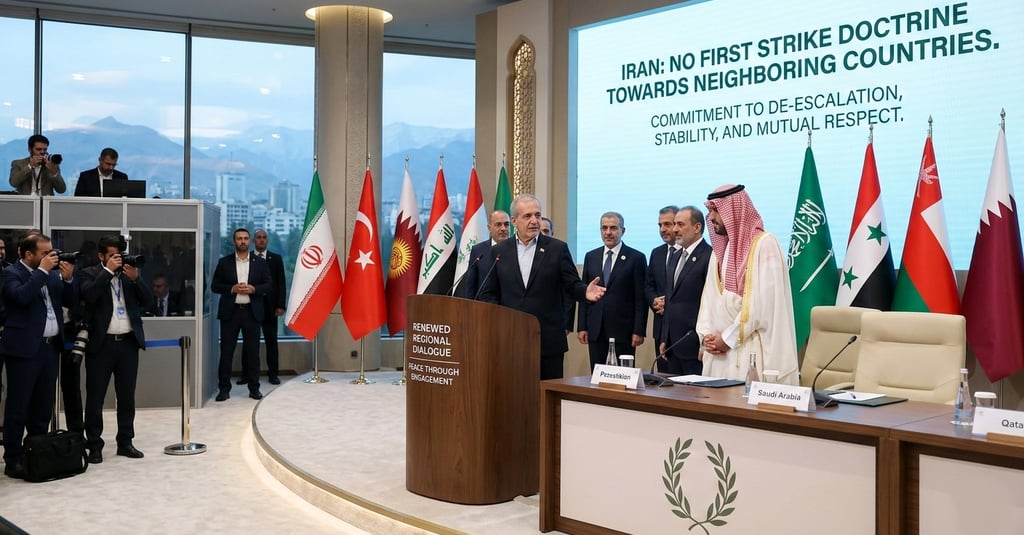
Following a period of escalating regional tensions, the Islamic Republic of Iran has announced a strategic shift in its foreign policy and military engagement rules. This decision, conveyed by President Masoud Pezeshkian and ratified by the Transitional Leadership Council, outlines Tehran’s commitment to halting missile strikes against neighboring countries.
The "No First Strike" Doctrine
Iran’s new military approach is rooted in the principle of "non-aggression unless provoked." This move is viewed as an effort to reassure neighboring states, particularly those hosting U.S. military assets. Tehran has sent a clear message: as long as these nations remain neutral in ongoing conflicts, they will not be targeted by Iranian forces.
Driving Forces: Economy and Infrastructure
This policy shift is not merely a diplomatic gesture; it is seen as a byproduct of pressing economic necessities. Experts highlight several key motivations behind this strategic de-escalation:
Seeking Economic Stability: Under the weight of oil shocks and international sanctions, the Iranian economy requires "breathing room" to manage rising domestic unrest.
Infrastructure Restoration: Instead of prioritizing military expenditures, Tehran aims to focus on repairing domestic infrastructure damaged by recent cycles of tension and conflict.
Energy Market Dynamics: The risk of a full-scale regional war threatens vital energy corridors, which in turn jeopardizes Iran’s primary source of revenue—oil exports.
Regional and Global Implications
Iran’s move has provided a degree of relief to global energy markets and may reshape the security architecture of the Middle East. This pledge of non-aggression could reopen communication channels between regional actors, potentially shifting the focus from military posturing to diplomatic dialogue.
In conclusion, the Pezeshkian administration's announcement signals a strategic pivot. Rather than maintaining an isolated war economy, Iran appears to be prioritizing domestic stability by seeking a precarious regional balance.
Contact
© 2026. All rights reserved.
Disclaimer: The information on Daily News Finance is for informational purposes only and does not constitute investment advice.